



planningandstrategicforesight.gov.mt

Malta’s Early Leaving from Education and Training (ELET) Strategy, launched in July 2023 by the Ministry for Education, Sport, Youth, Research, and Innovation, aims to reduce further the country’s ELET rate to the European Union’s target of 9% by 2030. In terms of definition, ELET refers to individuals aged 18 to 24 who have attained, at most, a lower secondary education and are not engaged in further education or training at the time of the Labour Force Survey (LFS). This strategy aligns with Sustainable Development Goal 4 (SDG4), promoting inclusive and equitable quality education.
Addressing ELET is a top policy priority for Malta and the National Education Strategy (2024-2030). The ELET Unit within the Directorate for Planning and Strategic Foresight, which goes back to its set up in 2014 as part of the former Strategic Plan for the Prevention of Early School Leaving in Malta (2014-2020), meant to reduce early leaving from education and training and ensure that every student has access to quality education and training opportunities. As a matter of fact, the transition from the former strategic plan to reduce early leaving to the present ELET strategy has led to a paradigm shift in the ELET Unit’s role. Whereas previously the unit’s main role was to monitor the strategic measures’ implementation in line with the strategic plan and discuss recommendations within working groups at compulsory and post-compulsory levels, currently it has undergone a more pragmatic stance by reaching out proactively at both school and collegial levels, while still maintaining the original roles established with its original set up.
Recognising that ELET has taxing social and economic repercussions, Malta has adopted a holistic and preventative approach to address this challenge. With an ELET rate standing at 8.6% in 2025, Malta has reached a historic low and, for the first time, outperformed the EU average of 9.1%, effectively meeting the EU’s 2030 target years ahead of time. This progress reflects sustained commitment, strategic policy direction, and coordinated action across the education sector, particularly through the Early Leaving from Education and Training Strategy launched in 2023 as part of the National Education Strategy (NES), which places strong emphasis on prevention and early intervention. The ELET strategy continues to build on an evidence-informed and integrated approach, to develop targeted actions and interventions that are designed to ensure better educational outcomes and align with both national and EU objectives for reducing ELET.
In line with SDG4: “Ensure inclusive and equitable quality education and promote lifelong learning opportunities for all”, the ELET Strategy (2023-2030) aims to:
The strategy adopts a two-fold comprehensive approach: an Early Warning System (EWS) and a whole-school approach to combat early leaving from education and training. The EWS is a key component of the strategy, designed to monitor and detect early signs of disengagement from education by focusing on:
By integrating SDG4 principles and EWS mechanisms, the ELET Strategy (2023-2030) creates a proactive and inclusive educational system that minimises school dropouts and enhances student retention.
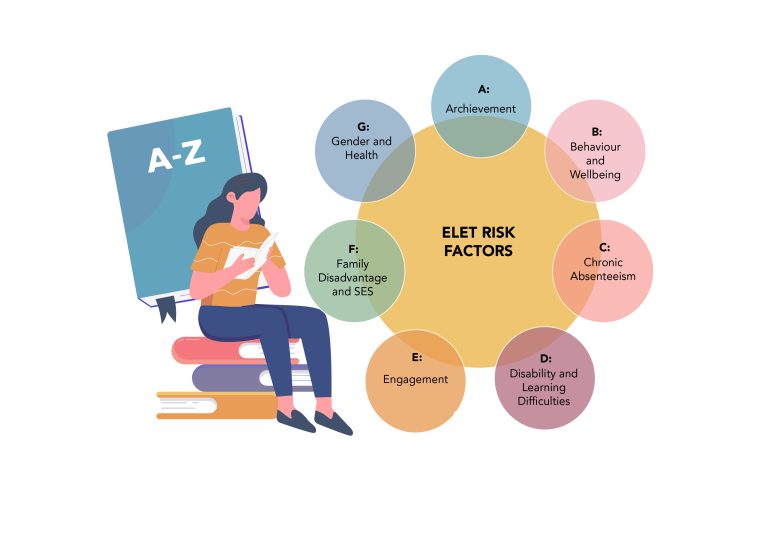
ELET is often the result of multiple interconnected risk factors, which can impact a student’s ability to remain engaged in education. These factors include:
Addressing these risk factors requires targeted, multi-level interventions which ensure that students receive the necessary support to remain in education and succeed.
In line with the EU model, the ELET Strategy for Malta (2023–2030) adopts a comprehensive whole school approach built upon three strategic pillars: prevention, intervention, and compensation. These include 15 strategic measures and 88 deliverables, designed to improve educational opportunities from early childhood through post-compulsory education. These initiatives aim to foster a more inclusive and supportive educational environment, thus ensuring that every student has ample opportunities to thrive. This is done by addressing the various risk factors and offering targeted support to students throughout their educational journey. The strategy also highlights the necessity of collaboration among various stakeholders, including educators, families, communities, and policymakers, in addressing ELET.
The Prevention pillar is the cornerstone of the ELET strategy. It prioritises the early identification and assistance for students at risk of dropping out through a proactive approach. Preventive measures focus on early childhood education, parental engagement, and equitable access to learning opportunities. Key actions include:
Intervention strategies focus on early identification and response to signs of educational disengagement. The interventions are designed to combat the identified ELET risk factors for Malta. Actions include:
The compensation pillar target post-compulsory education whereby initiatives are intended to re-engage individuals in education and equip them with the necessary skills for the workforce. Thus, compensation measures aim to offer second-chance learning opportunities. These include:
A flagship initiative of Malta’s ELET Strategy for 2023-2030, the Family, Community, School Link (FCSL) programme seeks to strengthen the connections between schools, families, and local communities, which is crucial in addressing early leaving from education and training. Launched in October 2024 through national funds, the programme is designed to support prevention and intervention efforts by encouraging active family engagement in students’ education. Operating initially as a pilot in four colleges and schools, FCSL provides tailored support and facilitates collaborations with community and governmental organisations. The initiative has already shown positive results, including enhanced communication between parents and teachers, reduced absenteeism, and targeted assistance for students with disabilities. In 2025, the programme expanded significantly to include additional schools across all colleges within the state sector, furthering its impact on student success and well-being through an integrated, person-centred approach.
The ELET Strategy (2023–2030) is a long-term commitment to reducing early leaving from education and training in Malta. Our strategic goal is to reduce Malta’s ELET rate to below 9% by 2030, in line with the EU’s Education and Training 2030 Framework. The strategy focuses on equity, well-being, and holistic development, ensuring that no student is left behind. It is implemented through a collaborative approach, engaging schools, families, policymakers, and community stakeholders.
By prioritising early intervention, evidence-informed planning, and stakeholder collaboration, the ELET Unit is committed to transforming the educational landscape, making learning accessible, inclusive, and adaptable to the needs of all students.